



Piercing Aftercare
About
Believe it or not, getting the piercing is the easy part, but taking care of it is just as important! Your piercing will vary in healing time, depending on a variety of factors including but not limited to: where you are pierced, how many piercings you're currently healing, your immune system, any medical conditions you might be experiencing, medications you're taking, your lifestyle and extracurricular activities, sleeping habits, and more!
We try to keep our aftercare instructions simple and comprehensive, so you can work it into your daily grooming habits. If you do experience any issues throughout your healing, or have questions about your piercing at any point, please book a Piercing Check up - we are always happy to assist!
Our aftercare and troubleshooting advice comes from the most up to date (puncture based) wound care knowledge in the industry, as well as over 10 years of working with body piercings and seeing how they heal.
Below you can find aftercare advice based on your piercing type, and general healing time for each piercing type.
Happy Healing!


General Healing Times
The following healing times are a general approximation based on the Association of Professional Piercers aftercare guide, and can vary from person to person.
Please visit our FAQ page if you are experiencing issues or prolonged healing, and then book a Piercing Check Up if your questions haven't been answered.
Navel Piercing: 6 - 12+ Months
Lip Piercings: 4 - 6+ Months
Eyebrow Piercings: 4 - 6+ Months
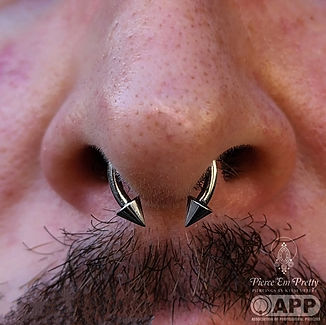
Septum Piercings: 3 - 6+ Months
Bridge Piercings: 6 - 8+ Months
Nostril Piercings: 6 - 12+ Months
Nipple Piercing: 6 - 12+ Months
Surface Anchor: 6-12+ Months
Surface Bar: 12+ Months
Aftercare Instructions
On the Outside:
-
Wash your hands prior to touching your piercing.
-
Rinse the front/outside of the piercing with clean, warm, running water. This will help gently remove any crusties on the piercing/jewelry.
-
If there is still debris or crusties on or around the jewelry or piercing, spray the piercing with sterile saline spray.
-
Grab a single-use, soft implement like non-woven gauze or clean paper towel & gently remove the debris on the outside of the piercing site.
-
Once the debris is completely gone, dry the outside piercing thoroughly. To lessen the likelihood of excess moisture & trauma to the area, we like to recommend drying the piercing site with a hairdryer on a cool setting (ensure to clean the back filter before doing so.)
If you do not have access to a hair dryer, you can also gently pat the piercing dry with non-woven gauze or clean paper towel.
On the Inside:
-
We recommend getting a new toothbrush to lessen the likelihood of introducing old bacteria to a new piercing.
-
If you typically use mouthwash, you can use a non-alcoholized mouthwash no more than twice daily during your normal oral hygiene routine. (any more than this, and you run the risk of developing oral thrush)
-
Any time you eat, drink, or smoke, rinse your mouth out with cold, filtered or bottled water.
-
Please avoid oral or sexual contact on the piercing until fully healed.
-
Try to avoid drinking alcohol, or eating spicy, sour or salty foods for the first two weeks, as this can increase bleeding and swelling.
.png)
